
Description
Microtube Capacity:
The volume of a microtube is the most critical factor in distinguishing different types from each other. Microtubes with small volumes, such as 0.1 and 0.2 milliliters, are commonly used for precise biological experiments involving minimal amounts of DNA and RNA using delicate techniques like PCR and Real-time PCR. These thin-walled, transparent microtubes exhibit high resistance to temperature changes, typically around ±20°C from 100°C. Microtubes sized at 0.5, 1.0, and 2.0 milliliters are often used for various extraction or biological sample storage purposes. They usually feature safety locks to withstand pressures from centrifugation and prevent accidental spillage, enhancing safety during handling. Among these, the largest microtube size available is 5 milliliters, serving as an alternative to cryotubes and Falcon tubes for sample storage or the extraction of physiological compounds like chlorophyll and total protein.
Types of Microtubes:
Generally, microtubes are categorized based on color, size, sterilizability, and the shape of their lids and bodies. They are commonly produced in three sizes: 0.1-2.0 and 5.0 milliliters, tailored to specific applications. The smaller sizes with thin, transparent walls are ideal for precise biological assays involving DNA and RNA. Larger 5.0 milliliter microtubes are often used in centrifuges.
Additionally, microtubes can be color-coded for specific applications, with most being made from transparent polypropylene. However, light-sensitive compounds may require colored microtubes, available in colors like blue, green, red, purple, yellow, and brown.
Microtube Design:
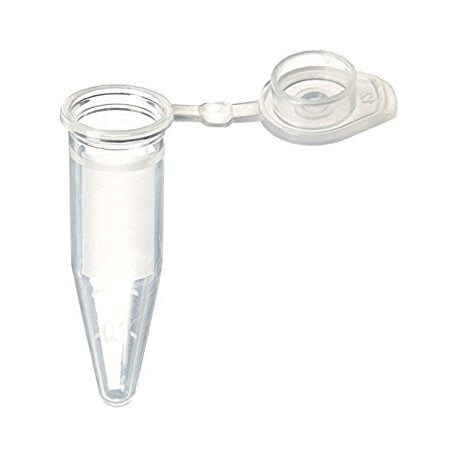
Microtubes are typically made of plastic, composed of polymers with polyethylene lids. Lids can be flat or domed, with the latter being more popular due to their better sealing properties, reducing material loss during laboratory use.
Microtube Applications:
Microtubes find extensive use in industrial and clinical settings, primarily for conducting assays with small volumes. In biology, they are used for reactions, separations, and sample storage of DNA and RNA, including PCR reactions. Their properties such as graduations, autoclavability, and centrifugal force resistance are considered for specific experimental needs.
In conclusion, microtubes are designed to prevent leakage and withstand temperatures from 80°C to 121°C, making them versatile for repeated autoclaving cycles. Their robust design and various sizes cater to a wide range of laboratory applications, ensuring efficient and reliable experimental outcomes.